


Seeing small black pellets underneath your kitchen cabinets, behind appliances, or in your garage can be quite disturbing. If you are asking, what does mouse poop look like, knowing its size, shape, color, and location can help you determine whether mice are active inside your home.
Mice feces are usually small pellets that look like little grains of rice, only even smaller than that. Fresh ones would be shiny and soft, while old ones would be dry and light-colored. Early detection makes it possible for you to solve the problem right away.
For residents of Grand Prairie and other cities in DFW Metroplex, identifying mice presence becomes especially critical because of the warm climate that keeps them active throughout the year.
What Does Mouse Poop Look Like?
So, what does mouse poop look like? The droppings of mice are usually tiny in size and tubular shaped with tapering or pointed ends. These droppings have a color varying from brown, black to grey depending upon their age and the diet of the mouse.
If fresh, these droppings can be somewhat moist and glossy in appearance. As time passes by, they become dry and dull. Droppings of mice are normally 1/8 inch to 1/4 inch in length.
These can usually be found in places through which mice move frequently such as:
- Kitchen cabinets and drawers
- Shelves of the pantry
- Behind fridges and stoves
- Underneath the sink
- Garages
- Along the walls
- In food storage areas
- Behind boxes and stored items
A group of pellets found in one place is more alarming than one single pellet.
How Can I Tell If Droppings Are From Mice?

Assuming that you want to know how you can distinguish the feces of a mouse from the feces of other rodents, then you need to look at the size and shape of the feces.
The droppings of a mouse will be smaller and thin in shape with pointed ends. Rat droppings, however, will be relatively larger and fat. Droppings of cockroaches may also look like tiny dark particles depending on the type of cockroach.
Location can also help distinguish one kind of droppings from the other. If you keep finding small pellets within your kitchen cabinets or behind electrical appliances or along the walls, then you have good reasons to believe that mice are at fault.
In the case of dropping where it is not known where they came from, it is wise to avoid touching the dropping with bare hands.
How Can I Know if I Have a Mouse at Home?

Apart from knowing what mouse droppings look like, there are other signs that you can use to detect the presence of mice.
These include:
Scratching & Scampering Sounds
The highest level of activity among mice takes place at night time. Scrambling and scratching sounds are made by the mice in walls, ceilings, cupboards, and other quiet places within the house.
Chewing/Gnawing Sounds
Because of the constant growth of the incisors in the mice, they must chew. Bite marks are found on food packaging, cardboard, wood, plastics, and other items.
Nest Materials
Nests can be created by mice with shredded paper, insulation, material, cardboard, and other soft items. Dark and untouched spots can be checked for these materials.
Strange Actions by Pets
Dogs and cats sometimes become fascinated with the location where mice have been. This may occur if they are persistently attentive to a specific wall, cabinet, or device.
Greasy Traces
Due to repeated contact between their body and the wall, mice can leave greasy traces on the wall or floor due to repeated movements.
Where Are Mouse Droppings Usually Found?

The feces of mice tend to be located where the sources of food, water, shelter, and paths are. The kitchen is a popular area since mice can get the bits of food that fall to the ground.
It would help to look around stoves, below cabinets, at the back of food, and around plumbing holes. Other places that mice can hide include garages, attics, storage rooms, and utility rooms.
If droppings are found in various rooms, then this may mean that mice are traveling within wall spaces or other interconnected parts of the house.
It would help not to remove only the pellets, since new droppings can appear even after cleaning.
What Gets Rid of Mice Immediately?
There is no guaranteed way to rid yourself of mice instantly. The use of traps will give you quick results if used properly, but to get rid of an infestation, there’s more than just eliminating mice individually.
The first thing that you need to do is eliminate easy food sources. Proper storage of your food is important, clean up your crumbs, and ensure that your pet’s food is properly stored.
The traps to be put at locations where the mice love passing through will work perfectly. But make sure the traps are out of reach of the children and pets.
But if the problem persists despite all this, then it is advisable to seek professional help on pest control.
How Likely Am I to Get Sick From Mouse Droppings?
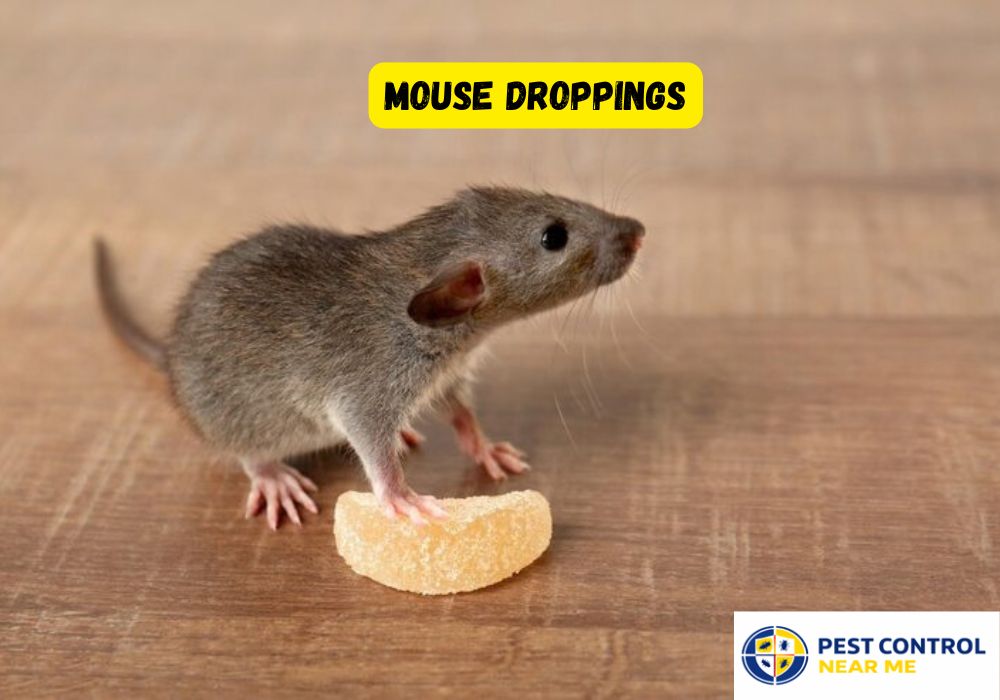
One of the major things to be wary of after identifying mouse droppings is getting exposed to any disease. The droppings themselves, as well as other waste products from mice, can possibly contain pathogens. However, just because you identify droppings, it does not necessarily mean that you will become ill as the chances of becoming ill will depend on several factors, including the extent of contamination and how the contaminated material is disturbed, which can lead to contaminated dust becoming airborne.
It is important not to use sweeping methods for handling the material in question because this can cause particles containing contaminants to enter the air. Ventilation should be applied to the room, disposable gloves should be worn, droppings should be saturated with disinfectant, and then left for as long as it is stated in the label of that particular disinfectant and then wiped up with paper towels. Afterwards, gloves should be taken off and hands washed.
How to Prevent Mice From Coming Back
When you know what mouse droppings look like, then you’ll find it easy to prevent any infestation since you’ll be able to inspect those places where there were signs before.
First, start checking from the outside of your property. There could be gaps in the structure, doors, windows, utility lines, ventilation gaps, or even the pipelines.
The food must be kept in sealed cans, and the kitchen countertops must be cleaned on a regular basis.
Furthermore, you will need to make sure that there is no problem of moisture like any type of leakage in the pipes and faucets.
When Should You Hire a Pest Control Technician?
If you notice any droppings despite cleaning, scratching noises at night, gnawing marks, or spot a mouse in your property, then you will need to have your property inspected by a professional.
The trained pest controller will be able to examine other aspects apart from what is seen on the surface; he will be able to pinpoint any possible entry points, nesting sites and other conditions that could have attracted the rodents.
Homeowners who wish to get help with pest control in Grand Prairie, Arlington, Dallas, Irving, Mansfield, Cedar Hill, Fort Worth and surrounding DFW communities need professional assistance. Follow Us on Facebook as well.
Final Thoughts
Now, coming back to our initial question, if you are thinking about what does mouse poop look like, then the following are the main clues – small black feces, slim in shape, having pointed ends, and droppings being found on walls, cabinets, areas where food is stored, or some other concealed places.
The presence of just one fecal pellet doesn’t necessarily indicate an infestation, but if you keep finding such clues, then you should consider taking action. Listen for scratching, signs of gnawing, nest building, and other similar indications of mice around your house.

