

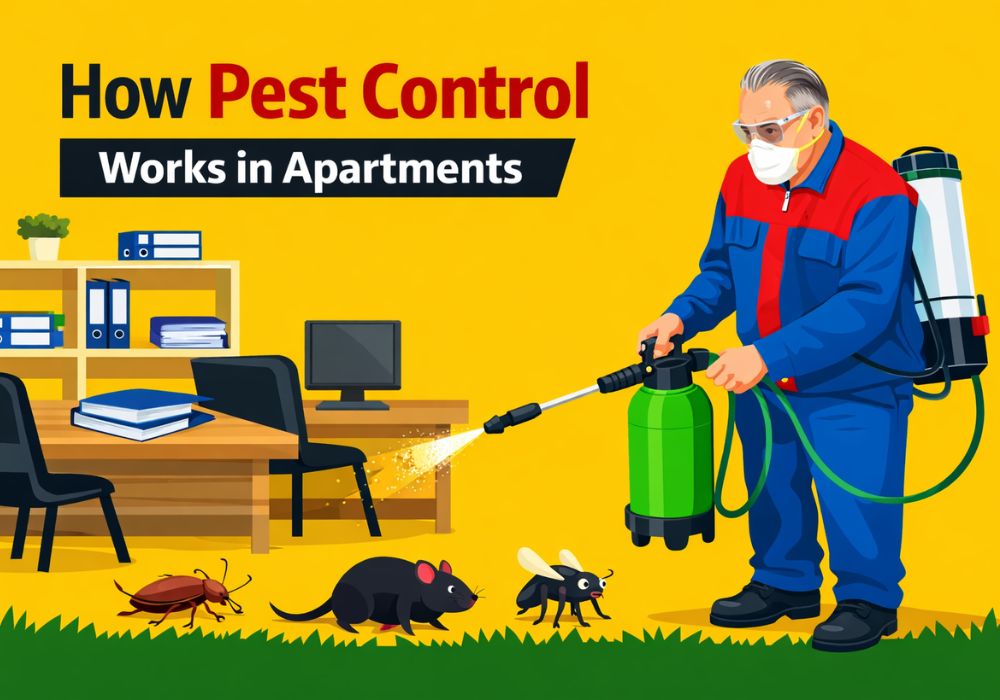
Apartment pest control is very different from treating pests in a single-family home. In multi-unit buildings, pests can travel easily through shared walls, plumbing lines, ceilings, vents, and hallways. That’s why professional pest control in apartments follows a structured process that includes detailed inspections, sealing entry points, and targeted treatments such as baits and residual sprays.
In most cases, pest control experts focus on high-risk areas like kitchens, bathrooms, utility spaces, and baseboards where pests tend to hide. They often work alongside property management teams to implement recurring building-wide services that help prevent infestations from spreading between units.
Why Pest Control is Necessary in Apartments
Apartments are more vulnerable to pest infestations due to shared infrastructure. Even if one tenant maintains a clean living space, pests can still migrate from neighboring units.
Common apartment pests include:
- Cockroaches
- Ants
- Rodents
- Bed Bugs
- Termites
- Spiders
Without routine pest control, infestations can quickly spread throughout the building.
Step by Step Process: How Pest Control Works in Apartments
Inspection
The first step in apartment pest control is a thorough inspection. Pest control professionals assess:
- Entry points
- Nesting areas
- Moisture-prone zones
- Food sources
- Signs of infestation
This helps determine the type of pest and the severity of the problem.
Exclusion (Sealing Entry Points)
Once inspection is complete, technicians seal gaps, cracks, and openings that allow pests to enter or travel between units. This includes:
- Wall gaps
- Pipe openings
- Window cracks
- Door frames
- Vent spaces
Exclusion prevents pests from returning after treatment.
Targeted Treatment
Depending on the pest type, professionals may apply:
- Gel bait treatments
- Residual insecticide sprays
- Insect growth regulators (IGRs)
- Dust applications
- Rodent traps
Monitoring and Follow-Up
Apartment pest control rarely ends after one visit. Follow-up treatments ensure pests are eliminated completely and help prevent reinfestation.
Many apartment complexes schedule:
- Monthly pest control services
- Quarterly maintenance plans
This helps maintain long-term pest prevention.
Common Methods Used in Apartment Pest Control
The five primary pest control methods include:
- Chemical control
- Biological control
- Mechanical control
- Cultural control
- Integrated Pest Management (IPM)
IPM is widely used in apartments as it combines multiple techniques for effective pest elimination.
Signs of a Pest Infestation in Apartments
You may need pest control services if you notice:
- Droppings
- Musty odors
- Bite marks
- Grease stains
- Scratching sounds in walls
- Shed insect skins
- Live pests during daytime
Conclusion
It is important to understand how pest control works in apartments. It can help tenants and property managers take the right steps to prevent infestations. Since pests can easily travel between units through shared walls and plumbing systems, professional pest control services are essential for effective treatment and long-term prevention.
With regular inspections, targeted treatments, and preventive maintenance, apartment pest control helps maintain a safe and pest-free living environment for all residents. Scheduling routine pest control services can stop minor pest problems from becoming building-wide infestations.
Frequently Asked Questions:
Is pest control worth it in an apartment?
Yes, professional pest control helps eliminate infestations and prevents pests from spreading to other units.
How long does it take pest control to spray an apartment?
Most treatments take between 30 minutes to 2 hours depending on apartment size and infestation severity.
How much is pest control per hour?
Pest control services may cost between $50 and $150 per hour depending on treatment type and location.
What are the 5 methods of pest control?
Chemical, biological, mechanical, cultural, and Integrated Pest Management methods are commonly used.
What is the hardest pest to exterminate?
Bed bugs and German cockroaches are among the most difficult pests to eliminate.
What are the basic rules of pest control?
Inspection, sanitation, sealing entry points, proper treatment, and follow-up monitoring.
Can I sleep in the room after pest control?
In most cases, you can return after a few hours once treated areas have dried.
What are the signs of a pest infestation?
Droppings, odors, scratching noises, and visible pests are common warning signs.
What is the first step in pest control?
A professional inspection is the first and most important step.
Do I have to wash everything after pest control?
Usually, only exposed food preparation areas need cleaning after treatment.
Which chemical is used for pest control?
Professionals use approved insecticides and growth regulators depending on the pest type.

