

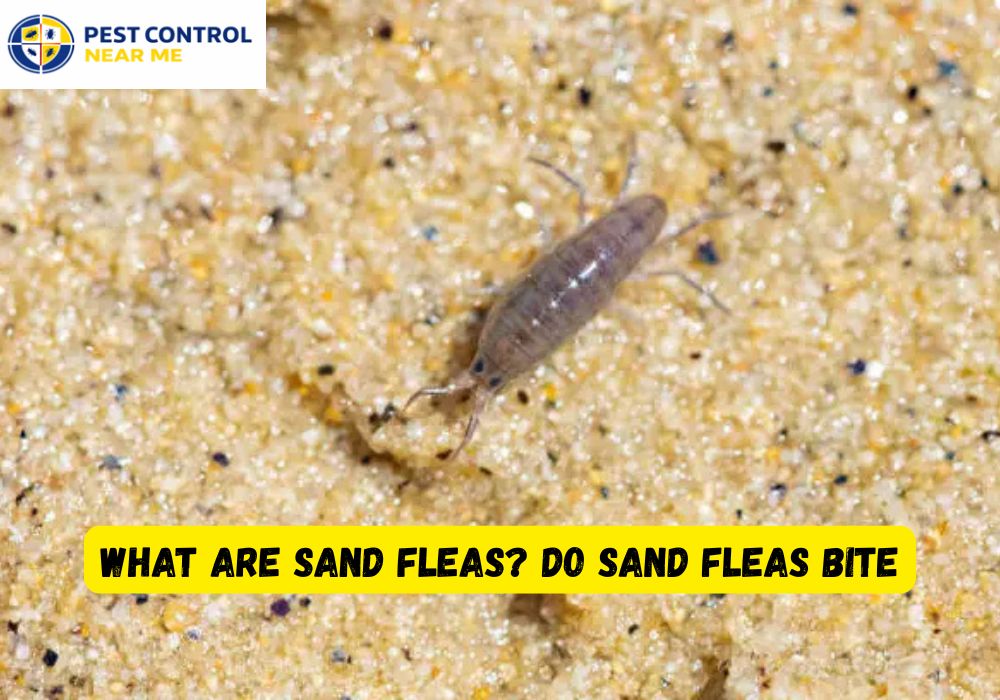
If you’ve ever walked along a beach and later noticed itchy red bumps on your ankles, you may have wondered: do sand fleas bite? The answer is a bit more complex than it sounds.
“Sand fleas” is a broad term used for several tiny creatures found near coastal areas. It can mean small beach crustaceans, biting insects like sand flies and no-see-ums, or the tropical burrowing chigoe flea (Tunga penetrans).
These can include harmless beach crustaceans, biting insects like sand flies, or even parasitic fleas in tropical regions. Some of these do cause sand fleas bites on humans, leading to itchy clusters, irritation, and in rare cases, infections. Their bites usually show up as red, itchy clusters on the feet and ankles. In rare cases, they can lead to skin infections or a condition called tungiasis.
In warm regions like Texas—especially during humid summers—understanding these pests is important for prevention and peace of mind.
What Are Sand Fleas? The 3 Types Explained
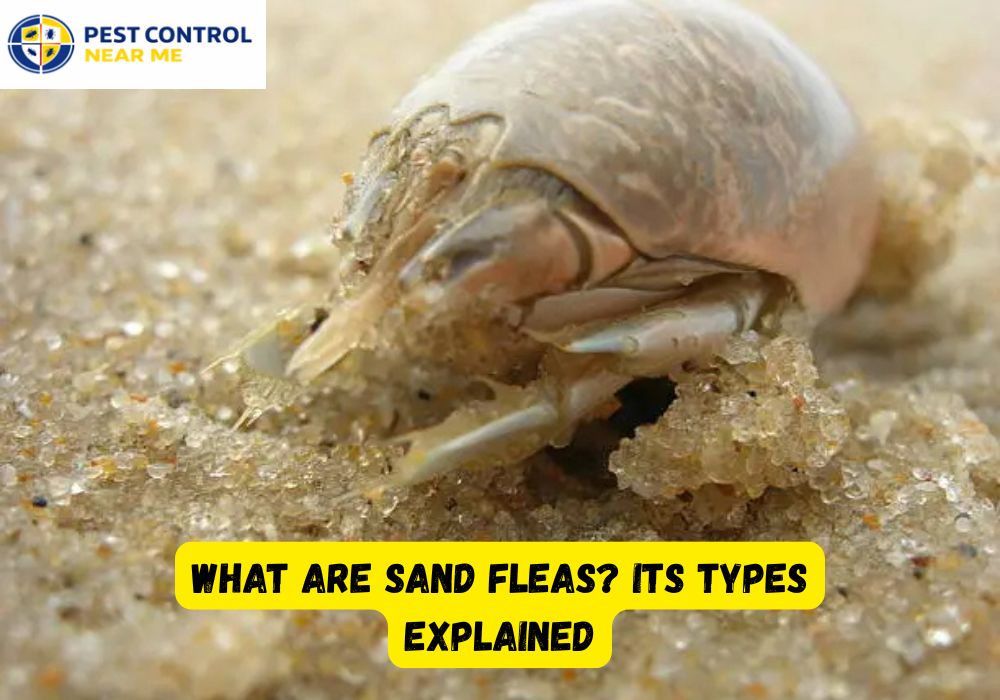
The confusion starts because three very different creatures share the “sand flea” nickname. Only two of them actually bite. Let’s sort them out.
Beach Crustaceans (Sand Hoppers)
- Tiny, shrimp-like creatures
- Found hopping along sandy shores
- Do NOT bite humans
- Completely harmless
People often mistake them for biting pests, but they don’t cause skin irritation.
Biting Insects (No-See-Ums and Sand Flies)
- Extremely small flying insects
- Active during dawn and dusk
- Feed on human blood
- Responsible for most sand mites bites and irritation
These are the primary culprits behind itchy bites on beaches.
Parasitic Fleas (Tunga penetrans)
- Found in tropical regions (Caribbean, South America, Africa)
- Female fleas burrow into the skin
- Cause a condition called tungiasis
Although rare in Texas, travelers may encounter them abroad. Read our latest post on Tiny Black Bugs on Dog Not Fleas: Identifying and How to Get Rid of Them in 2026
Do Sand Fleas Bite Humans?
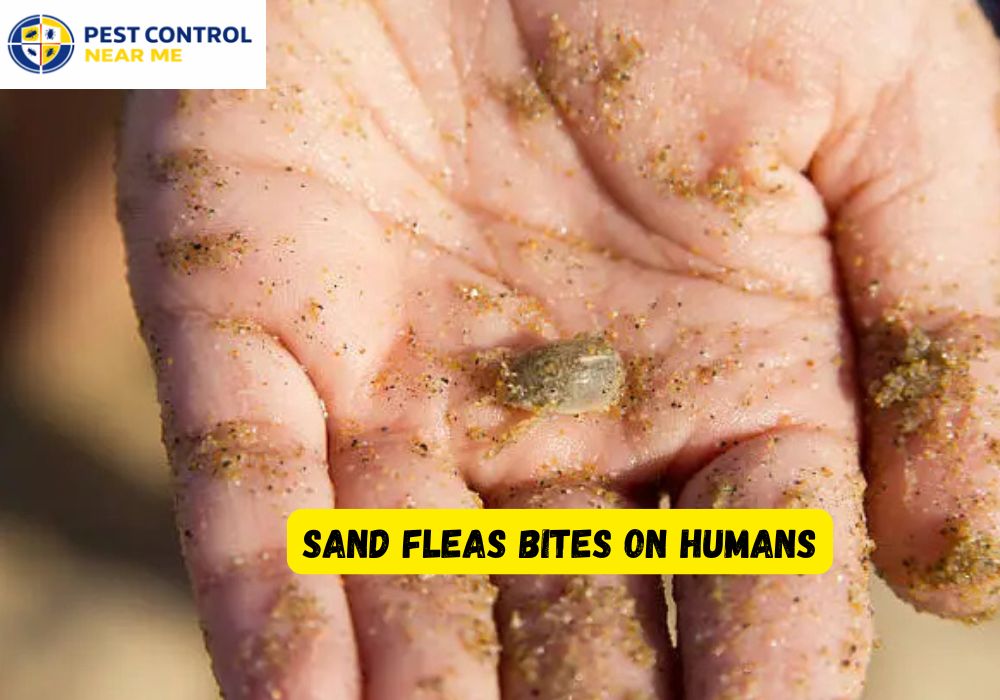
Short answer: it depends on which “sand flea” you mean. Do sand fleas bite? Yes, two of the three types do.
- Beach crustaceans do not bite. They only pinch or crawl, which can feel like a light irritation.
- Sand flies and biting midges do bite. They pierce the skin to feed on blood, leaving itchy welts.
- Tunga penetrans does more than bite. The female burrows into your skin, which is far worse than a surface bite.
So when people talk about painful sand fleas bites, they’re usually describing biting midges at the shore or, for travelers, the burrowing chigoe flea.
What Do Sand Flea Bites Look Like on Humans?
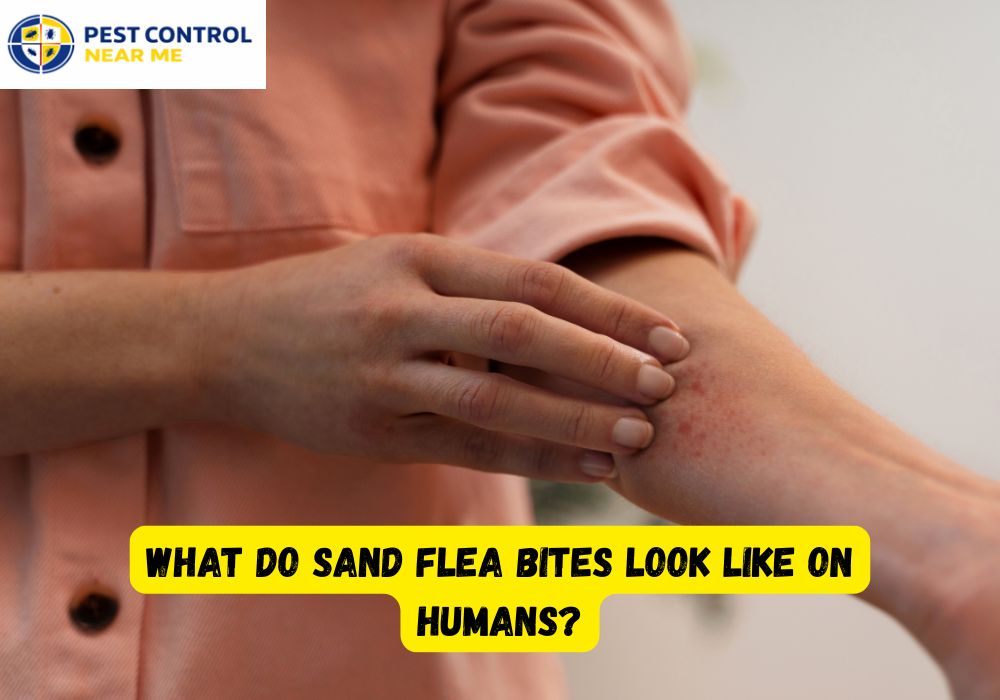
Sand fleas bites on humans typically appear as clusters of small, red bumps. They cluster because these pests feed close to the ground, right where your skin meets the sand.
You’ll most often see them on the:
- Ankles
- Lower legs
- Feet and toes
The bumps may turn into welts or small blisters, and they itch intensely. For most people, the bites fade within a few days with basic care.
Tungiasis looks different and more alarming. Instead of a simple bump, you’ll see a raised lesion with a dark or black dot in the center. That dot is the burrowed flea. It causes strong inflammation and can make walking painful if left untreated. Read also 15 Tiny Bugs That Look Like Fleas (How To Tell the Difference)
Symptoms of Sand Flea Bites on Humans
Most sand flea bite symptoms are mild but annoying. Knowing what to watch for helps you decide when to treat at home and when to see a doctor.
Common symptoms include:
- Clusters of small, itchy red bumps, welts, or blisters
- Redness and swelling around each bite
- Persistent itching, especially at night
More serious signs point to trouble:
- A raised lesion with a dark center (a sign of tungiasis)
- Spreading redness, warmth, or pus (possible secondary infection)
- Difficulty walking from a burrowing flea in the foot
Scratching open the bites raises your infection risk. If a burrowing flea is left in place, the danger climbs even higher.
Not sure whether biting pests are hiding around your DFW property? Reach out to Pest Control Near Me TX for the best recommendations.
Sand Fleas vs Regular Fleas: Key Differences
People often mix up sand fleas and the common household fleas that bother pets. They behave very differently. This table clears it up.
| Feature | Sand Fleas | Regular Fleas |
| What they are | Crustaceans or biting insects | Tiny wingless insects |
| Where they live | Beaches, wet sand, salt marshes | Homes, pets, carpets, yards |
| Biting behavior | Bite or burrow at the shore | Actively feed on blood indoors |
| Infest homes/pets? | No | Yes |
| Main health risk | Itching; tungiasis in tropics | Itching; disease transmission |
| Size | A few millimeters to about 1 inch | About 1–3 millimeters |
The big takeaway: regular fleas move into your home and reproduce, while sand fleas stay near the coast. If pests are breeding indoors around Grand Prairie, you’re likely dealing with household fleas, not sand fleas.
Sand Flea Bite Treatment
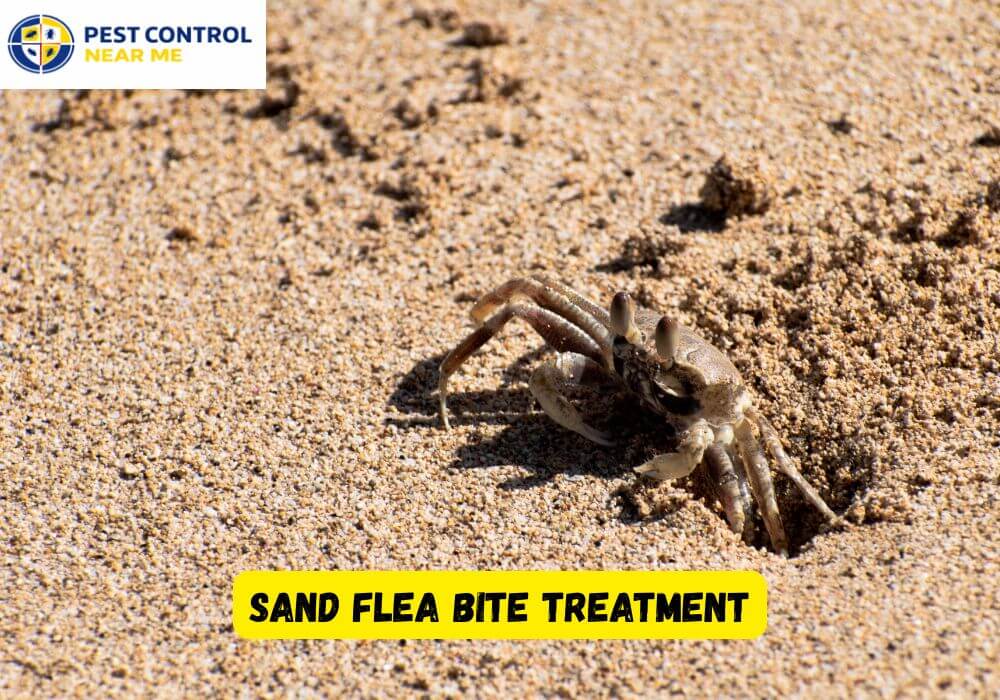
Treatment depends on the type of bite. Minor surface bites clear up at home. Burrowing flea infections need a doctor.
Relief for Minor Bites
For ordinary sand flea and midge bites, simple care works well:
- Wash the area with soap and water.
- Apply 1% hydrocortisone cream or calamine lotion to calm the itch.
- Use a cold compress to reduce swelling.
- Take an oral antihistamine for stubborn itching.
Try hard not to scratch. Broken skin invites bacteria and turns a minor bite into a bigger problem.
Medical Care for Burrowing Fleas
Tungiasis is a different story. Never scratch at or try to dig out an embedded tropical flea yourself.
See a doctor for sterile removal. A provider can safely extract the flea, treat the wound, and may recommend a tetanus booster to prevent infection. This is important because unsafe removal can spread bacteria and cause serious complications.
How to Prevent Sand Flea Bites
Prevention is far easier than treatment. A few smart habits at the beach keep these pests off your skin.
- Wear shoes on the sand. Closed-toe shoes and socks shield your feet and ankles.
- Avoid dawn and dusk. Biting midges are most active during these cooler, low-light hours.
- Don’t sit directly on the sand. Use a towel, blanket, or beach chair as a barrier.
- Apply repellent. Use products with DEET, or natural options like coconut oil, on your feet and legs.
If you’re traveling to tropical regions, add extra care. Keep your feet covered and reapply repellent often to lower your tungiasis risk.
While planning your defense against biting pests, it also helps to know whether pest control is worth it in Texas for ongoing peace of mind. And if you have pets, our guide on whether pest control is safe for pets answers common concerns. Curious about biting bugs in general? You might also wonder whether fruit flies bite, which surprises a lot of homeowners.
Conclusion
Sand fleas are not always what they seem. While some are harmless, others—like sand flies and parasitic fleas—can cause uncomfortable and sometimes serious bites. Knowing how to identify, treat, and prevent sand fleas bites on humans is key to staying safe, especially during warm months.
By taking simple precautions and addressing pest activity early, you can avoid irritation and enjoy your time outdoors without worry.
FAQs
How long do sand flea bites last?
Most sand flea bites last a few hours to several days. The exact timing depends on your skin’s sensitivity and how well you care for the area. Avoiding scratching and using anti-itch cream helps them heal faster.
Do sand fleas bite humans?
Yes, some do. Biting midges (no-see-ums) and the tropical Tunga penetrans flea bite humans, while beach crustaceans called sand hoppers do not. The bites usually land on the feet, ankles, and lower legs.
Why do sand fleas bite?
Biting insects like sand flies and midges bite to feed on blood, which they need to survive and reproduce. Female Tunga penetrans fleas burrow into skin to feed and lay their eggs.
Sand fleas bites on humans?
Sand fleas bites on humans show up as clusters of small, red, itchy bumps, most often on the ankles and feet. Some may swell into welts or blisters, and severe tropical cases form a lesion with a dark center.
What do sand flea bites look like?
They look like small, red, raised bumps grouped in clusters. They tend to appear on the lower legs, ankles, and feet, and they itch. Tungiasis bites look like a raised sore with a black dot in the middle.
Are sand fleas dangerous?
Most sand flea bites are more of a nuisance than a danger. However, scratching can cause secondary infections, and tropical burrowing fleas can lead to tungiasis, which may cause serious complications if untreated.
Sand fleas vs fleas?
Sand fleas are crustaceans or biting insects that live near the coast and don’t infest homes. Regular fleas are insects that live on pets and inside homes, feed on blood, and can transmit disease. Regular fleas reproduce indoors; sand fleas do not.
Sand fleas size?
Sand fleas range from just a few millimeters up to about one inch long, depending on the species. Beach crustaceans tend to be larger, while biting midges are so tiny they’re often called no-see-ums.
How to tell if sand fleas are under your skin?
Look for a raised, painful lesion with a dark or black dot in the center, usually on the foot. This dot is the burrowed flea. The area often becomes red, swollen, and inflamed. See a doctor for safe removal.
How long do sand flea bites last on humans?
On humans, most bites clear within a few days to about a week. Tungiasis lasts much longer, since the flea can stay embedded for up to six weeks and requires medical removal.
What does sand flea bites look like?
Sand flea bites appear as clusters of small red bumps or welts, often itchy, on the ankles, feet, and lower legs. Tropical burrowing bites form a distinct lesion with a dark central dot.
Where do sand fleas live?
Beach crustaceans and biting midges live in wet sand, beaches, salt marshes, and other damp coastal areas. The burrowing Tunga penetrans flea lives in tropical and subtropical regions like the Caribbean, Africa, and South America.
What happens if a sand flea bites you?
A biting midge or sand fly bite causes itchy red bumps that usually fade in a few days. If a tropical burrowing flea embeds in your skin, it can cause tungiasis, with pain, swelling, and infection risk.
What kills sand fleas on skin?
For surface bites, washing with soap and water plus anti-itch treatment handles the irritation. For burrowing fleas, a doctor removes them with sterile tools and may use antiparasitic medication. Never try to dig them out yourself.
How do I keep sand fleas from biting me?
Wear closed-toe shoes and socks on the sand, avoid the beach at dawn and dusk, sit on a towel or chair instead of the sand, and apply repellent with DEET or coconut oil to your feet and legs.
What does a sand flea bite look like?
It looks like a small, red, itchy bump, usually clustered with others on the feet or ankles. A burrowing flea bite looks different, forming a raised white or red lesion with a black dot at its center.

