

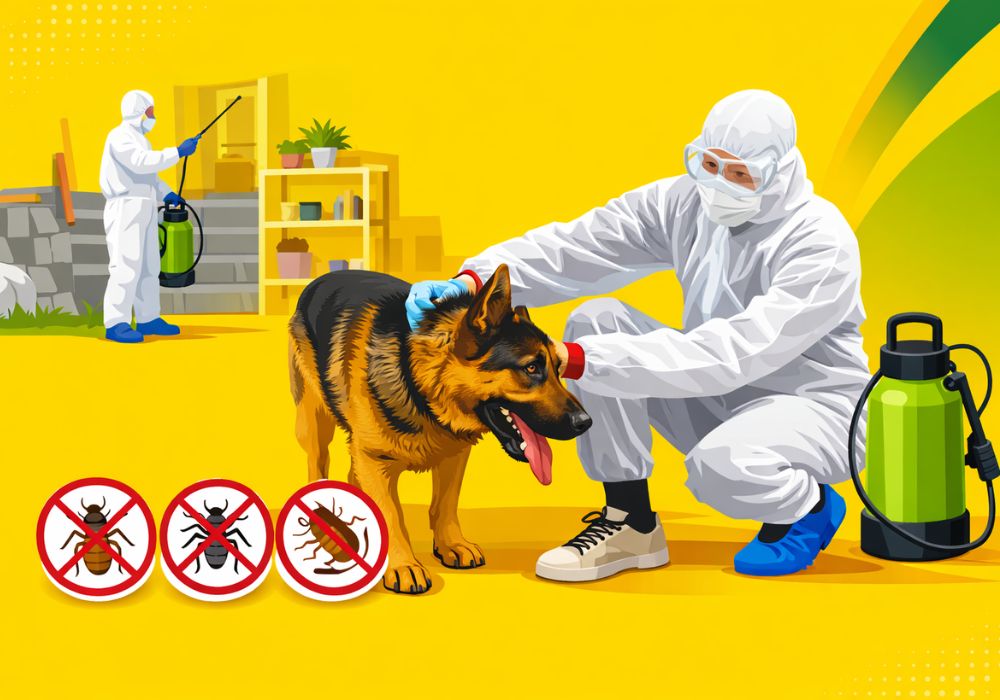
If you’re a pet owner dealing with ants, cockroaches, mice, or termites, one question always comes first: is pest control safe for pets? The good news is that modern pest control treatments are increasingly designed to be safer for both humans and animals when applied correctly by trained professionals. However, this doesn’t mean every pest control spray is safe for pets immediately after use.
In most cases, pest control can be safe for pets when handled properly—but pets usually need to stay away from treated indoor or outdoor areas for around 1 to 3 hours until the products have completely dried. While many solutions are formulated with pet safety in mind, certain chemicals (such as synthetic pyrethroids) may be harmful to animals—especially cats—if misused or overapplied. Improper exposure can lead to symptoms like vomiting, tremors, breathing issues, or even seizures in rare cases.
Understanding how pest control that is safe for pets actually works will help you protect both your home and your furry family members in 2026.
Is Pest Control Safe for Pets in 2026?
Today’s professional pest management methods are far more advanced than older chemical-heavy treatments used in the past. Licensed exterminators now rely on targeted, low-toxicity products and integrated pest management (IPM) techniques that focus on prevention rather than blanket chemical application.
This means pest control that is safe for pets typically includes:
- Precise application methods
n- Low-dose formulations - Gel baits instead of sprays where possible
- Enclosed bait stations
- Pet-safe perimeter treatments
- Non-repellent insecticides
Still, the safety of your pet depends on three main factors:
- The type of pest control spray used
- How it is applied
- Whether safety instructions are followed after treatment
Even pet-friendly products can become harmful if pets walk through wet surfaces, lick treated areas, or inhale airborne spray particles before they settle. Read our latest post on How Pest Control Works in Apartments: 2026 Detailed Guide
Is Pest Control Spray Safe for Pets?
Not all pest control sprays are created equal.
Some liquid treatments are designed to dry quickly and bind to surfaces so they don’t transfer easily to paws or fur. Others may remain active on contact and pose a higher risk if pets are exposed too soon.
For example:
- Water-based sprays are generally safer once dry
- Dust treatments can irritate lungs if inhaled
- Foggers may require longer evacuation periods
- Outdoor lawn treatments may cling to pet fur if still wet
This is why professional pest control companies usually recommend keeping pets away from treated areas until the spray has fully dried.
Common Pest Control Treatments and Pet Safety
| Treatment Type | Pet Safety Level | Waiting Time Recommended | Notes |
| Gel Baits | High | Minimal | Placed in cracks/crevices |
| Bait Stations | Very High | None | Enclosed and tamper-proof |
| Liquid Sprays | Moderate | 1–3 Hours | Safe once dry |
| Dust Insecticides | Low–Moderate | Several Hours | Avoid inhalation |
| Foggers/Bombing | Low | 6–24 Hours | Not ideal for pet homes |
| Botanical Treatments | High | 1–2 Hours | Plant-derived formulas |
Professional exterminators will choose pest control that is safe for pets based on your specific pest issue and the type of animals in your home.
How Long After Pest Control Is It Safe for Pets?
A very common concern among homeowners is how long to wait before letting pets back inside.
In general
- Indoor spray treatments: 1–3 hours
- Outdoor lawn treatments: 2–6 hours
- Fumigation: 24–72 hours
- Bait-based treatments: Pets can often remain at home
Always wait until:
- Sprays are fully dry
- Odors have dissipated
- The technician gives clearance
Once dry, most modern pest control spray products are considered safe for pets under normal conditions.
Can Pest Control Be Pet Friendly?
Yes—pet-friendly pest control is absolutely possible when companies use:
- Integrated Pest Management (IPM)
- Reduced-risk pesticides
- Targeted crack-and-crevice applications
- Pet-safe baiting systems
- Monitoring traps instead of blanket sprays
Pet-friendly doesn’t mean chemical-free—it means the treatment is applied in a way that minimizes risk to animals. Last week we published a post on How Much is Pest Control Service Per Month in Grand Prairie, Texas
How Do Exterminators Work with Pets?
Professional pest control providers typically:
- Ask about pets before treatment
- Recommend temporary relocation if needed
- Avoid food bowls, toys, and bedding
- Treat only necessary areas
- Use pet-safe placements for baits
You may be asked to:
- Cover aquariums
- Move litter boxes
- Remove pet toys
- Keep pets in untreated rooms
This collaboration ensures pest control that is safe for pets without compromising effectiveness.
What to Do with Pets When Pest Control Comes?
Before treatment:
- Remove food and water bowls
- Pick up toys and bedding
- Vacuum floors
- Inform the technician about pet hiding spots
During treatment:
- Keep pets in a separate room
- Board pets if fumigation is required
After treatment:
- Wait recommended time
- Wipe down surfaces if advised
- Monitor pets for unusual symptoms
Is It Worth Getting an Exterminator for Mice?
Yes. Mice can:
- Chew electrical wiring
- Spread disease
- Damage insulation
- Contaminate food
DIY traps may not eliminate infestations completely. Professional exterminators use enclosed bait stations that are safer for homes with pets.
What Is the Hardest Pest to Exterminate?
Some of the most difficult pests include:
- Termites
- Bed bugs
- German cockroaches
- Carpenter ants
These pests often require professional treatment plans that balance effectiveness with pet safety.
What Is the Safest Pest Control?
The safest options typically include:
- Gel baits
- Enclosed bait stations
- Botanical insecticides
- Growth regulators
- IPM-based treatments
These minimize airborne exposure and reduce the need for large-scale spraying.
What Pest Is Most Damaging to a House?
Termites are considered the most destructive structural pest because they silently consume wood framing, flooring, and support beams.
What Is the Most Annoying Pest in the World?
Mosquitoes are widely considered the most irritating pest due to constant biting and disease transmission.
What Is the Dirtiest Pest?
Cockroaches are known to carry bacteria such as E. coli and Salmonella, contaminating surfaces and food sources.
Can Pets Be Home During Pest Control?
In many cases, yes—but only when:
- Bait-based treatments are used
- No airborne sprays are applied
- Pets are kept away from treated areas
What Does God Say About Bugs?
Many religious texts mention insects as part of the natural balance of creation. While pests can be harmful in human living spaces, caring for animals and maintaining cleanliness are generally emphasized values across traditions.
What Country Has No Pests?
No country is entirely pest-free, although some isolated regions have fewer species due to strict biosecurity controls.
Conclusion
So, is pest control safe for pets? The answer is yes—when treatments are applied correctly and safety guidelines are followed. Modern pest control that is safe for pets focuses on targeted application, reduced-risk products, and preventive strategies that limit exposure to animals. While no pest control spray is safe for pets during application, most professional treatments become safe once they have fully dried and settled.
By working with experienced exterminators and taking simple precautions before and after treatment, you can eliminate pests from your home without putting your pets at unnecessary risk in 2026.
FAQs
What Pest Control Is Safe for Pets?
Treatments such as gel baits, enclosed bait stations, and botanical insecticides are commonly considered pest control that is safe for pets when professionally applied.
How Long After Pest Control Is It Safe for Pets?
Usually 1–3 hours for indoor sprays, once the treated areas are fully dry.
Can Pest Control Be Pet Friendly?
Yes, especially when integrated pest management methods are used.
How Do Exterminators Work with Pets?
They adjust treatment plans to avoid pet exposure and may recommend temporary relocation during application.
What to Do with Pets When Pest Control Comes?
Keep them away from treated areas and follow all safety instructions provided.

