

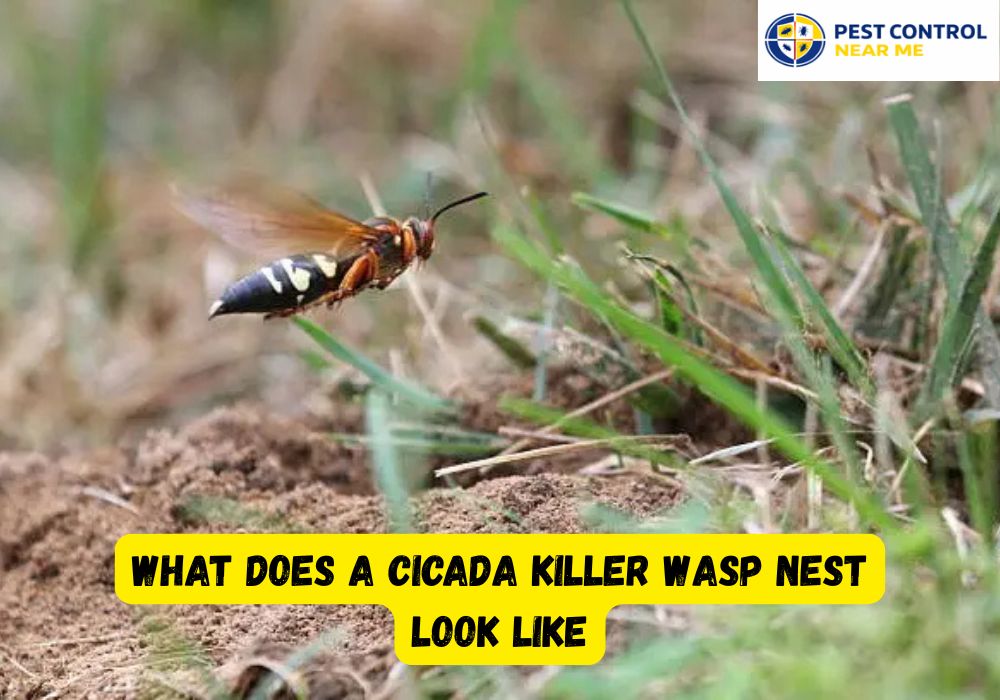
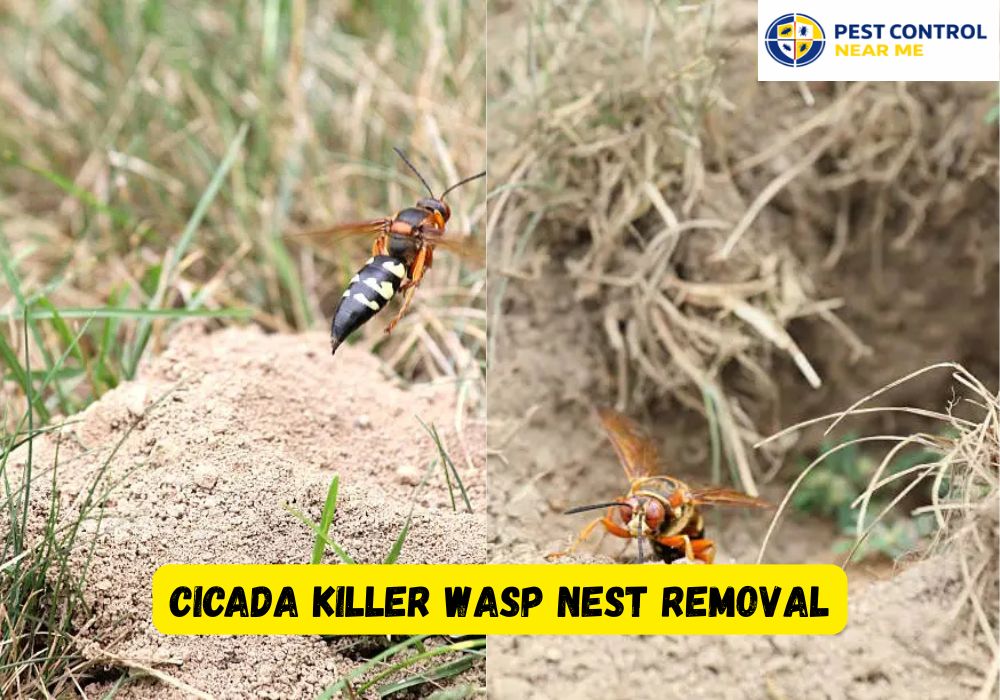
You spot a giant wasp diving into a hole in your yard, and a small mound of dirt sits beside it. That’s a classic sign of a cicada killer wasp nest.
Here’s the quick answer. A cicada killer wasp nest looks like a U-shaped mound of loose dirt with a 1 to 1.5-inch wide hole leading to an underground tunnel. You can clear them with insecticidal dust, a targeted spray, or boiling water, and professional treatment usually runs $100 to $250.
These wasps look scary, but they’re mostly harmless to people. Still, their digging can wreck a nice lawn fast, especially in the dry, sandy soil common around Grand Prairie.
In this guide, you’ll learn how to identify the nest, how to get rid of them, and what removal really costs.
What Does a Cicada Killer Wasp Nest Look Like?
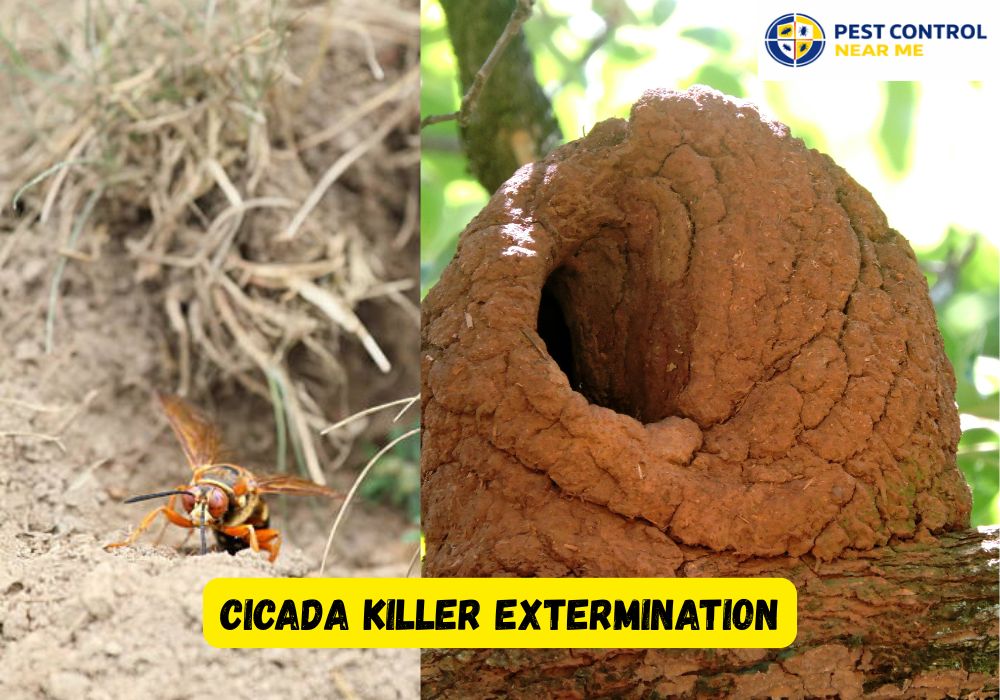
Unlike hornets or paper wasps, cicada killers don’t build nests in trees or under your eaves. They dig straight into the ground.
That difference is the easiest way to identify them. If the “nest” is in the dirt, not hanging in the air, you’re likely dealing with cicada killers.
Ground Burrows
Cicada killers are digger wasps. Each female tunnels into the soil to build a private burrow for her eggs.
You won’t find a papery gray nest. Instead, you’ll see a single hole leading down into an underground tunnel.
Dirt Mounds
Look for a U-shaped pile of fine soil or sand around the entrance. It looks like a tiny volcano or an oversized ant hill.
This loose dirt is the soil the wasp pushed out while digging. Several mounds close together often mean several burrows.
Hole Size
The opening is wide, roughly the size of a quarter or silver dollar. That’s about 1 to 1.5 inches across.
A hole this big, paired with large wasps, is a strong sign of cicada killers rather than smaller ground bees.
Location
These wasps love dry, sandy, or loose soil in full sun. Thin, patchy lawns are their favorite target.
Check near sidewalks, driveways, flower bed edges, and bare spots. In the Texas heat, sun-baked yards give them the perfect place to dig.
Are Cicada Killers Dangerous?
Despite their size, cicada killers rarely sting people. The males can’t sting at all, and the females only sting if you grab or squeeze them.
The real problem is the damage. Dozens of burrows can leave your lawn full of holes and loose dirt piles.
So the goal isn’t fear, it’s control. Clearing the nests protects your grass and keeps kids and pets from disturbing them. Follow on Facebook for more pest updates.
How to Get Rid of Cicada Killer Wasps
Once you’ve confirmed the nest, treatment is straightforward. The key is treating the burrow directly, usually in the evening when the wasps are inside.
Insecticide Dust
Dust is the most reliable DIY option. Products like Tempo Dust or a permethrin-based dust work well.
Puff the dust straight into the hole after dark. As the wasp crawls in and out, she spreads the product deep into the tunnel.
Liquid Spray
A liquid concentrate also does the job. Cypermethrin or permethrin mixes are common choices.
Set your sprayer to a pin-stream and aim right into the entrance and tunnel. This soaks the burrow where the wasp lives.
Boiling Water
Want a chemical-free route? Pour several gallons of boiling water down the burrow entrance.
It’s eco-friendly, but it often takes repeat tries. Deep tunnels may need more than one round to fully flood.
Keep in mind that home fixes have limits, much like how people wonder whether rubbing alcohol truly kills ants or whether common household sprays like Lysol kill pests. For a heavy infestation, professional-grade products win.
Prevention
Stopping the next generation is all about your soil. Cicada killers hate damp, packed ground.
Water your lawn deeply and often to keep the soil moist. Add thick layers of mulch to garden beds so the dirt stays tight and hard to dig.
Filling bare patches with healthy grass removes their favorite nesting spots too.
Cicada Killer Wasp Nest Removal Cost
Cost depends on whether you do it yourself or call a pro. Here’s a clear breakdown so there are no surprises.
| Option | What You Get | Typical Cost |
| DIY Insecticide Dust | Container of Tempo Dust or permethrin dust | $15 – $40 |
| DIY Aerosol / Liquid | Aerosol can or concentrated liquid spray | $15 – $40 |
| Boiling Water | Free, but needs repeat applications | $0 |
| Professional Treatment | One-time yard visit by an exterminator | $100 – $250 |
DIY works well for one or two burrows. If your yard is riddled with holes, a single professional visit often saves time and money.
Before you book, it helps to understand what pest control costs in Grand Prairie, Texas and typical monthly pest control pricing in Grand Prairie so you can plan ahead.
DIY vs. Professional Cicada Killer Extermination
DIY is cheaper and fine for small problems. You control the timing, and supplies cost under $40.
But it takes repeat effort, and treating dozens of burrows by hand gets old fast. Miss a few, and they’ll be back next season.
Professional cicada killer wasp nest removal costs more upfront, but it’s thorough. A pro treats every burrow, advises on prevention, and often guarantees the work.
Still weighing your options? Reading up on whether pest control is worth it in Texas can help you decide quickly. And if you rent, check whether landlords are responsible for pest control in Texas before you spend a dime.
Pet owners often ask about safety too. It’s smart to know whether pest control is safe for pets and how long after pest control you can go back inside before treatment day.
Conclusion
A cicada killer wasp nest is easy to spot once you know the signs: a U-shaped dirt mound with a wide, quarter-sized hole in dry, sunny soil. For small problems, insecticide dust, targeted spray, or boiling water handle the job, while a professional visit runs $100 to $250 for full-yard peace of mind. Keep your Grand Prairie lawn watered, mulched, and thick to stop them from coming back. When the burrows multiply, a trusted local team makes cicada killer extermination quick and worry-free.
FAQs
How do you get rid of cicada killer wasps?
Treat each burrow directly with insecticidal dust like Tempo Dust, a permethrin or cypermethrin spray, or several gallons of boiling water. Apply in the evening when wasps are inside, and keep your lawn damp and mulched to prevent new digging.
Will cicada killer wasps sting humans?
Rarely. Males can’t sting at all, and females only sting if you grab or step on them. They’re far less aggressive than hornets or yellow jackets.
Should you get rid of cicada killer wasps?
If they’re damaging your lawn or nesting near walkways where people pass, yes. A few burrows in an out-of-the-way spot may not need treatment, since the wasps are mostly harmless.
Are cicada killers aggressive?
Not toward people. Males may hover and dart at you to defend their turf, but they have no stinger. Females focus on hunting cicadas, not bothering humans.
How painful is a cicada killer sting?
Most people describe it as mild, less painful than a honeybee sting. Because females rarely sting, actual stings are uncommon.
What’s the worst wasp to get stung by?
Many people rank the tarantula hawk and the warrior wasp among the most painful. Their stings are far worse than a cicada killer’s.
What is the deadliest wasp ever?
The Asian giant hornet is often called the deadliest due to its potent venom and large size. Multiple stings can be dangerous, especially to people with allergies.
What colors do wasps dislike?
Wasps tend to avoid lighter, cooler tones. Wearing white, tan, or light green may draw less attention than bright or dark colors.
What hurts worse, a bee or wasp sting?
It varies by person and species. Wasp stings often feel sharper, and wasps can sting more than once, while a honeybee stings only once.
Reference:
https://www.yahoo.com/lifestyle/articles/cicada-killer-wasp-nest-yard-110000525.html

